A cold oven, a door stuck locked after self-clean, or a temperature that drifts fifty degrees off the dial all need someone who works inside oven cavities for a living. Our dispatchers route callers around Nesconset to those pros, day or night.
Oven heating with the controls off? Cut power at the breaker panel before anything else. An oven that keeps heating when nothing is set usually has a stuck relay on the control board, and it should not stay plugged in overnight. If it is a gas oven and you notice a gas odor, get outside, call the gas utility or 911 from there, and only then reach our line.
Why use our line
Why Callers Choose Our Network for Oven Repair in Nesconset, NY
An oven that will not bake can be a ten-dollar fuse or a control board, and the only way to know is to test it. We route your call to independent pros who do that testing every day.
Licensed and insured independent pros
Each technician we connect you with is an independent business owner with their own license and insurance. A reputable pro is happy to show proof before work begins.
Upfront written quotes from the pro
Once the oven is diagnosed, the technician writes down the part, the labor and the total. Nothing gets ordered or installed until you approve it.
Rapid local dispatch
Our dispatchers check which oven pros near Nesconset have room today. Same-day visits are common when a local technician has an opening, and the dispatcher shares the time window during that call.
Oven tools and trade knowledge
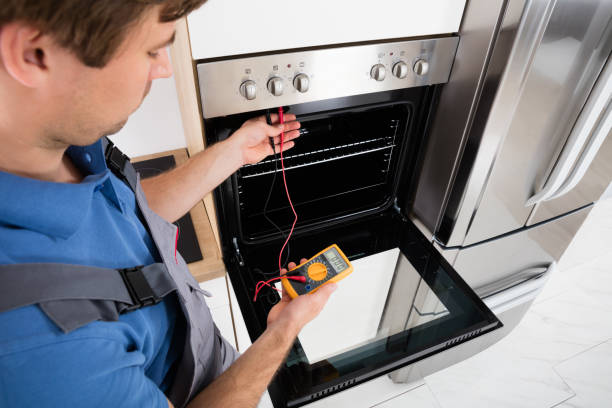
Oven work calls for a clamp meter to read igniter amperage, a multimeter for sensors and elements, a thermocouple probe to verify cavity temperature, and the wiring diagram from the tech sheet. An ESD strap protects the control board during handling.
Ranges, wall ovens and everything between
Our line handles the oven half of freestanding and slide-in ranges, single and double wall ovens, steam ovens, speed ovens and combination microwave wall units. The trouble lives inside the cavity: elements, igniters, sensors, fans, door locks and the control board that runs them.
When you call, mention whether the oven is gas or electric, whether it has convection, and any code on the display. Write down the model number from the frame behind the door or the drawer if you can reach it.
Inside the cavity
Oven Problems the Pros Diagnose and Fix
From weak igniters to stuck door locks, here is what independent oven technicians handle every week.
Electric ovens
Bake and Broil Elements
If the bottom coil has a visible break or the oven only heats from the top, the bake element is the usual suspect. Hidden elements under a smooth floor panel need the floor pulled, which the pro handles during the visit.
Element resistance and ground test
Hidden bake element access and swap
Broil element and terminal check
Gas ovens
Bake and Broil Igniters
When you hear the oven try, see a glow, but never get flame, the igniter is likely drawing too little current. An amperage draw test with a clamp meter tells the technician in minutes, and the broil igniter gets checked the same way.
Igniter amperage draw test
Gas safety valve check
Broil igniter diagnosis
Temperature
Sensor, Calibration and Hot or Cold Ovens
An oven that burns cookies or leaves bread raw usually has a bad temperature sensor or a calibration offset. Many RTD sensors read about 1,080 ohms at room temperature; the pro checks yours against the tech sheet and verifies the cavity with a thermocouple probe.
RTD sensor resistance test
Thermocouple probe temperature check
Calibration and offset adjustment
Self-clean
Door Locks and Thermal Fuses
Self-clean runs the cavity extremely hot, which is when door lock motors, lock switches and thermal fuses fail. A door stuck locked after the cycle, or an oven that went dead mid-clean, both fall here.
Door lock motor and switch test
Releasing a door stuck locked
Thermal fuse and wiring check
Convection
Convection Fan and Element
Noise from the back wall or uneven browning in convection mode points to the fan motor or the ring element around it. The pro checks motor windings and element continuity with the panel off.
Fan motor winding and bearing check
Convection element continuity
Fan blade and rear panel inspection
Controls and door
Control Boards, F-Codes, Hinges and Gaskets
F-codes, a blank display, or relays that click without heat all lead to the electronic range control or relay board. Sagging doors, broken hinges and torn gaskets that leak heat get fixed on the same visit.
Fault code and relay output testing
Control or relay board replacement
Door hinge and gasket replacement
Read the signs
Oven Symptoms and Likely Causes
Match what you see to the list below before you call. The technician still tests to confirm, but this helps the dispatcher brief the pro.
Symptom
Common cause
What the tech checks
Gas oven glows but never lights
Weak bake igniter
Igniter amp draw against valve spec
Electric oven heats from top only
Burned bake element
Element resistance and visual damage
Food burns or stays raw at set temp
RTD sensor or calibration off
Sensor ohms, probe reading, offset
Door stuck locked after self-clean
Lock motor or lock switch
Motor operation and switch signals
Oven dead after self-clean
Blown thermal fuse
Fuse continuity and wiring
F-code on the display
Sensor, lock or control board fault
Code chart in the tech sheet
The process
Four Steps to a Working Oven
From the first ring to the final test bake, the process stays simple.
Call Dispatch
Dial +1-855-636-0185 and tell the dispatcher whether the oven is gas or electric, what it is doing, and any display code. We look for an independent oven pro near Nesconset with an open slot.
Rapid Mobile Arrival
A local technician travels to your kitchen with oven parts on the truck. You hear the expected window during the call, and same-day appointments happen often when schedules allow.
Expert Assessment and Quote
The technician runs the tests that fit your symptoms: amp draw on a gas igniter, ohms on the sensor, continuity on the fuse. You get an upfront written quote and make the call.
Fix Completed and Tested
The job ends when the oven reaches and holds its set temperature on a test run. Most of the independent pros print their parts and labor warranty on the ticket, so ask for it before they leave.
Holiday and big-dinner emergencies
Thanksgiving eve is when the weak igniter finally gives up. If you are cooking for a crowd and the oven goes cold, call as early as you can so the dispatcher has the widest choice of pros.
A door that stays locked after self-clean is not a crowbar job. Wait for the cavity to cool completely, then let a pro free the lock mechanism and find out why it stuck.
Oven gone cold?
The line is answered 24 hours a day, including holidays.
Two days before a holiday dinner our oven glowed orange and never caught. The technician tested the igniter with a clamp meter, explained the valve needs a certain draw, and replaced it the same morning.
Patricia L.Homeowner, Nesconset
After a self-clean cycle the door latch stayed shut. The technician found a failed lock motor, swapped it along with the switch, and walked me through why the cycle is so hard on those parts.
Kevin O.Homeowner, Nesconset
My cakes kept sinking and the edges burned. The technician put a thermocouple probe in the middle rack and found the oven was running hot. The sensor read way off spec, so he replaced it and the oven tracks the dial now.
Yolanda F.Home baker, Nesconset
Our double wall oven lost power to the top cavity right after cleaning. The technician traced it to the thermal fuse, swapped it, and looked over the wiring around it before signing off.
Samuel H.Homeowner, Nesconset, NY
Oven FAQ
Common Oven Repair Questions
Why does my gas oven igniter glow but the oven never lights?
A glowing igniter is not always a working igniter. The safety valve opens only when the igniter reaches a set amperage, and worn glow bars fall short. The technician measures the draw and replaces the igniter if it is weak.
How do I know if my oven temperature sensor is bad?
Signs include food that burns or stays raw at the correct setting, long preheat times, or an F-code tied to the sensor. Many sensors read about 1,080 ohms at room temperature, and the pro compares yours to the spec for your model.
My oven door is stuck locked after self-clean. What should I do?
Do not pry the door. Allow full cooling, cut and restore power once, and if the lock still holds, call. The pro can free the latch and replace the lock motor or switch that stuck.
Why did my oven stop working completely after a self-clean cycle?
Self-clean pushes the cavity to extreme heat, and that can blow the thermal fuse or damage the control board. A blown fuse cuts all oven power. The technician tests the fuse first since it is the simpler fix.
What does an F-code on my oven display mean?
Each brand uses its own code list. An F-code tells the pro where to start testing, whether that is the sensor circuit, the lock, or the control board, but the code alone does not prove a part is bad.
Is it worth repairing a wall oven or should I replace it?
For most wall oven failures, repair is the practical choice because the cutout size limits replacements. Ask the pro for an honest view and a written quote, then decide.
Where we dispatch
Oven Repair Service Area Around Nesconset
Our dispatchers route oven calls from single-family homes, townhouses, condos and rental units throughout Nesconset and the communities around it. The independent pro drives to you with common igniters, elements and sensors already loaded.
Property managers and landlords call too, since a tenant without a working oven is a tenant calling every hour. Give the dispatcher the unit number and the best contact for entry.
Zip codes covered around Nesconset: 11767 11787
Get dinner back on schedule
Bake, broil, convection or self-clean: call and we will find a local pro.